
The country’s record oil production is colliding with mounting pressure on its power grid, driven by data centers, artificial intelligence, and rising industrial demand.
The United States is now the world’s largest producer of oil. But that no longer defines its energy strength. In the age of artificial intelligence, power is measured less in barrels and more in the ability to generate and sustain electricity at scale.
Pressure is coming from multiple directions at once — artificial intelligence, reindustrialisation, transportation, and strategic competition with China — pushing energy demand to levels the U.S. system was not designed to absorb.
U.S. oil output is running at around 14 million barrels a day, a historic record. In 2010, production stood at roughly 5.5 million barrels a day. The surge was driven by the shale revolution, hydraulic fracturing, and technological gains that sharply boosted productivity. But that abundance has not resolved the central question now confronting Washington: how much usable energy the U.S. economy can sustain in this new phase.
There is no single figure, but projections help frame the scale of the challenge.
Electricity demand could rise by about 25 per cent by 2030, driven by data centers for AI applications, industrial growth, and electrification, according to an analysis by consultancy ICF. Meeting that increase would require expanding generation capacity and strengthening the power grid.
Put into context, covering that growth would mean building dozens of large new power plants in less than a decade, or massively accelerating the expansion of wind, solar, nuclear, and gas generation, along with transmission networks capable of moving that electricity to where it is needed. The problem is no longer simply how much energy is generated, but whether infrastructure can grow fast enough to keep pace with demand.
The expansion of artificial intelligence, in particular, has introduced a new kind of load: constant, power-intensive, and concentrated in electricity.
The AI Power Surge
The country hosts more than 5,000 data centers, which already consume nearly 4 per cent of all U.S. electricity, according to Lawrence Berkeley National Laboratory, a U.S. Department of Energy research institution. A single large-scale data center can require as much power as a mid-sized city such as Fort Lauderdale, Florida, regulators say.
That helps explain why the energy debate in Washington has been reshaped. It is no longer only about gasoline prices or daily oil output. It is about technological competitiveness — and that competition has a specific rival: China.
Another emerging factor is compounding the dilemma. As Fatih Birol, executive director of the International Energy Agency, has warned, energy security is no longer measured only in oil and gas, but in access to critical minerals — rare earths, lithium, and copper — essential for power grids, batteries, clean energy, and advanced technologies.
The world’s second-largest economy not only consumes more total energy than the U.S. — in part because of its population size — but has expanded its electricity-generation capacity at a far more aggressive pace. Its centralised system allows it to build large power plants and transmission lines quickly, ensuring a continuous supply for industry and its technology sector. In the race for artificial intelligence, energy has become as strategically decisive as semiconductors.
From that perspective, the White House’s interest in Venezuelan oil no longer looks like an isolated episode. It reflects not an immediate shortage of crude, but a search for flexibility, redundancy, and supply control as energy pressures intensify. Even the world’s largest oil producer is seeking more room for manoeuvre when mistakes become costly.
America’s Real Energy Limit
Tensions are also surfacing at home. While the federal government has stressed the urgency of producing more energy, some clean-generation projects have been cancelled or slowed.
In early January 2026, the Department of Energy withdrew funding from community solar projects in Puerto Rico designed to strengthen a fragile grid and lower costs in vulnerable communities. At the same time, several offshore wind projects along the U.S. East Coast and in the Northeast have been suspended or delayed following permit withdrawals and regulatory changes driven by the Trump administration.
The government itself has acknowledged that the power system is nearing an inflection point. Natural gas remains the dominant source of U.S. electricity generation, accounting for just over 40 per cent, followed by nuclear at around 20 per cent and coal at roughly 16 per cent. Wind and solar have grown rapidly, but that shift coincides with an uncomfortable reality: after decades of relatively stable electricity prices, tariffs have begun to rise just as demand is accelerating.
Energy Secretary Chris Wright has drawn a direct link between energy and strategic power. In November, he warned that artificial intelligence would have “enormous ramifications for defence and national security” and said that “if China significantly outpaces us in AI, we would become the second nation on the planet”. The greatest risk, he acknowledged, is not a lack of companies, capital, or scientific talent, but failing to develop power-generation capacity in time.

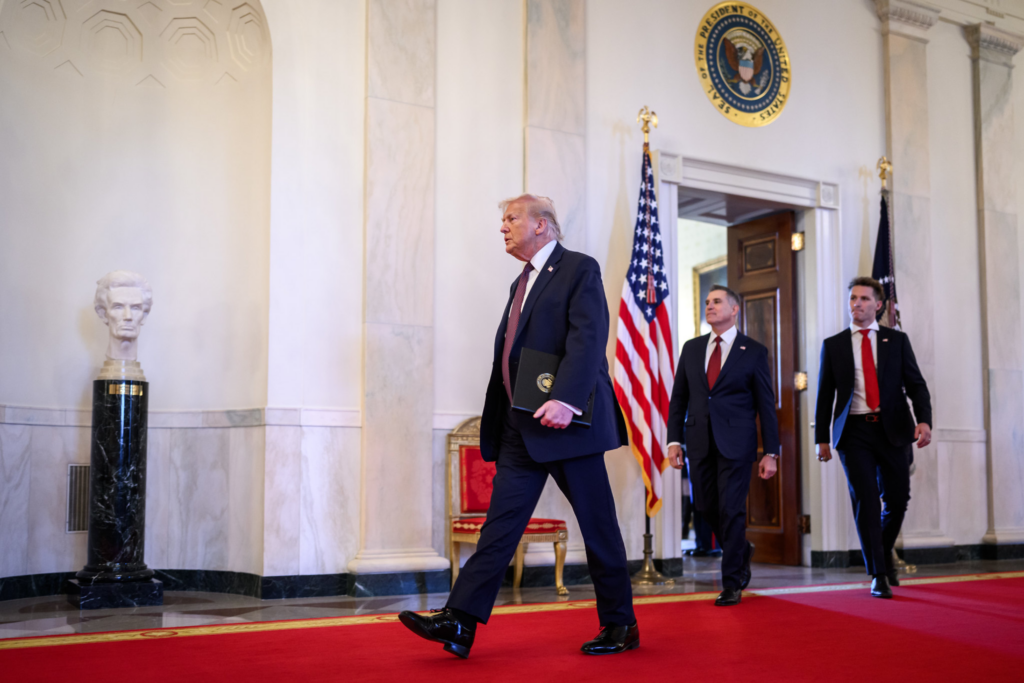
That logic helps explain the White House’s growing strategic interest in securing these inputs — from agreements reached with Ukraine to guarantee supplies of critical minerals, to President Donald Trump’s insistence on controlling Greenland on national-security grounds.
The core misunderstanding persists: confusing oil production with energy sufficiency. The United States does not face a shortage of crude. It does face a shortage of usable energy — especially reliable, continuous electricity available at scale.
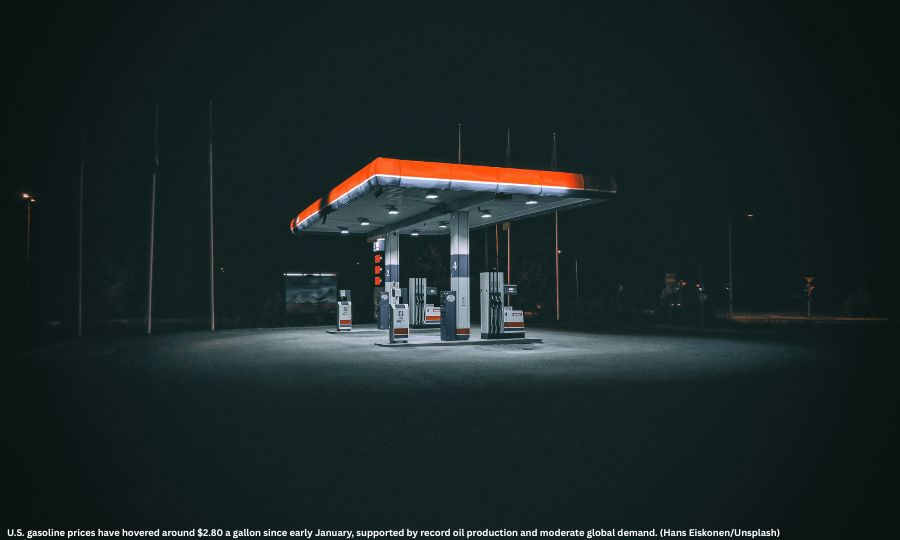
Paradoxically, all this is unfolding while gasoline prices remain relatively low — about $2.85 a gallon in January 2026 — thanks to record oil output and moderate global demand. But that calm at the pump says little about the country’s real energy challenge: generating the electricity the digital economy requires.
Producing more oil still matters. But it no longer defines power. In the age of artificial intelligence, the decisive question is not how many barrels are pumped, but whether the country can generate, transmit, and sustain the energy its own technological ambitions demand. Much more than electricity prices now depends on the answer.