
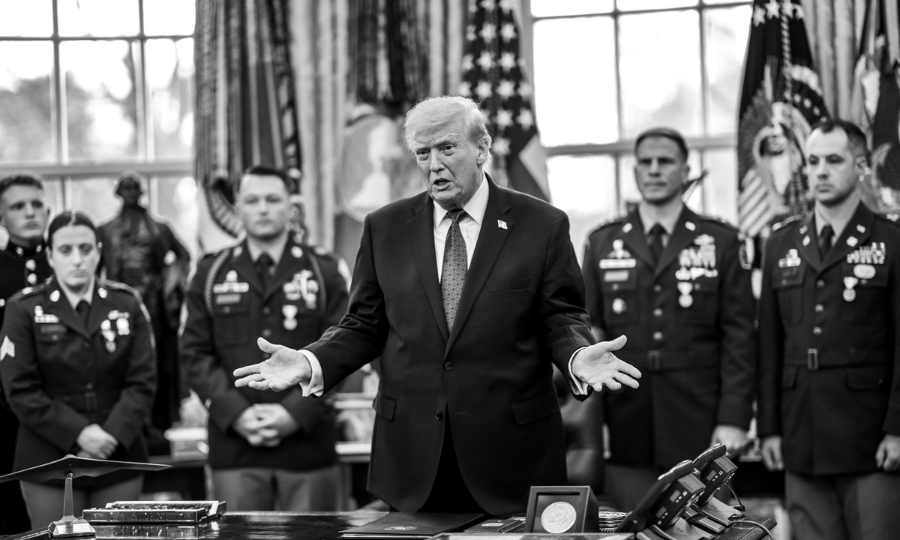
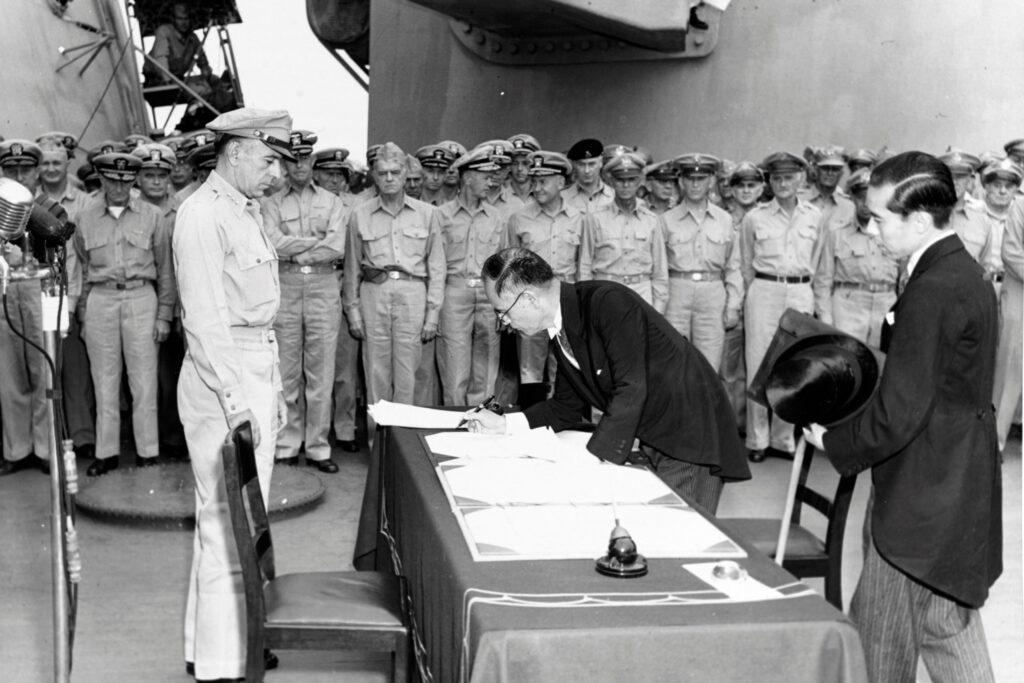
In postwar Japan, Washington pursued reform through continuity, reshaping the regime without presenting the occupation as a total rupture with the existing order.
The capture of Nicolás Maduro in a U.S.-led military operation marked a turning point in Venezuela’s long-running crisis and opened a broader question that extends beyond the immediate event: what role Washington is prepared to assume in shaping Venezuela’s political, institutional, and economic future.
Venezuela arrives at this moment after more than a decade of cumulative collapse. With a population of 28.5 million, the South American country—home to the world’s largest proven oil reserves—has been left with a devastated economy, chronically deteriorating public services, and deep social fractures. Compounding that collapse is one of the largest migration crises in the Western Hemisphere: nearly eight million Venezuelans have fled the country, a mass exodus that has permanently reshaped its social and economic fabric.
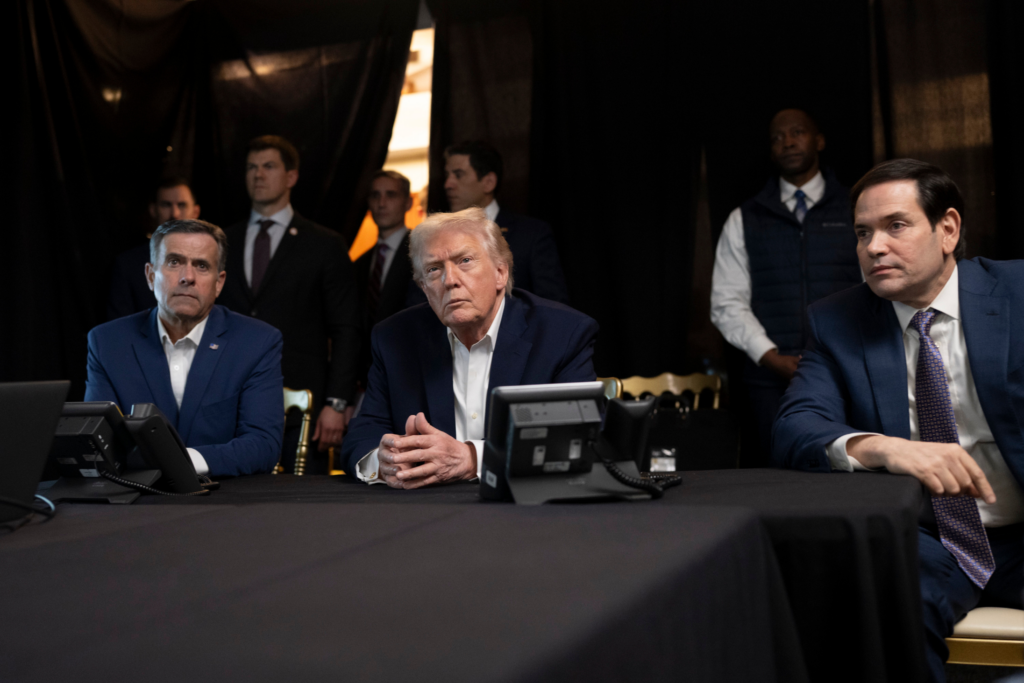
Against that backdrop, President Trump’s assertion that the United States could “run” Venezuela during a transition cannot be dismissed as mere rhetoric. The verb itself shifts the debate away from diplomatic pressure and international support and into far rarer—and heavier—territory in U.S. history: the direct administration of a foreign state. That choice of language inevitably invites comparison with the few historical precedents in which Washington assumed governing responsibilities abroad. Japan after World War II resurfaces as the most ambitious example of such an undertaking, while Iraq looms in more recent memory as a cautionary tale about the limits, costs, and failures of external occupation.
The rare case of full control
Between 1945 and 1952, over seven years, the United States did far more than influence a defeated Japan. It assumed full political, institutional, and economic control of the state, oversaw the drafting of a new constitution, and fundamentally restructured the workings of power. That comprehensive exercise in administration turned Japan into the historical reference point that inevitably reemerges whenever Washington contemplates governing—or “running”—another country, especially when contrasted with later efforts, such as Iraq, that became synonymous with overreach and failure.
Venezuela’s situation diverges sharply from that precedent. Unlike Japan in 1945, the Venezuelan state apparatus was not fully dismantled following Maduro’s removal. Executive authority was assumed by Delcy Rodríguez, who had served as Mr. Maduro’s vice president and was a central figure within the inner circle of Chavismo. The transition followed internal constitutional mechanisms, within an institutional framework that largely remained intact.
That administrative continuity, however, rests on fragile political ground. Mr. Maduro had been accused of fraud in the 2024 presidential election—an outcome widely challenged by the opposition and not recognized by the United States—leaving his legitimacy severely eroded even before his capture.
That unresolved legitimacy crisis casts a long shadow over any transition in which power remains in the hands of figures closely tied to the same contested political bloc. The result is a difficult balancing act: rupture through military force combined with continuity through administration—a sudden change in leadership that does not necessarily amount to a refounding of the state.
Here again, the Japanese case proves illuminating by contrast. During the occupation of Japan, the United States preserved symbolic continuity at the core of the state while transforming the regime itself. Noriko Kawamura, a prominent historian of modern Japan at Washington State University, has emphasized that the occupation was not perceived domestically as a wholesale replacement of the existing order.
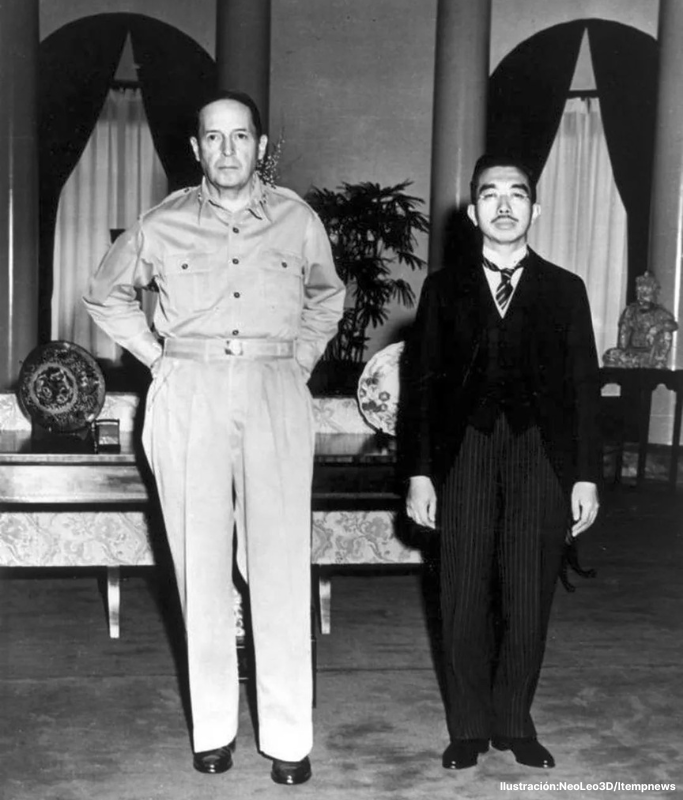
“The US objective in Japan was not to change the existing regime in Japan, at least in the eyes of the Japanese people. Emperor Hirohito continued to stay on the throne until he died in 1989,” Mrs. Kawamura explained in an interview.
In practice, the occupation authority did not abolish the throne; it redefined it. The emperor was transformed from a divine absolute monarch into a symbolic head of state under a new constitution that, over time, was embraced by Japanese society.
Mrs. Kawamura adds a decisive nuance that is often overlooked outside academic circles: the occupation succeeded because Japanese society itself was willing and able to work with the occupying forces. Its success, she argues, was like “the clapping of two hands”—democratization policies imposed from above met a society capable of absorbing and making use of those reforms from below.
Preserving the state while transforming the regime
Although many changes were enforced under military pressure, the Japanese were able to make use of them thanks to preexisting institutional infrastructure, a developed political culture, and an education system that had already prepared the population to value freedom, democracy, and peace—a process rooted in reforms dating back to the mid-19th century, she explained.
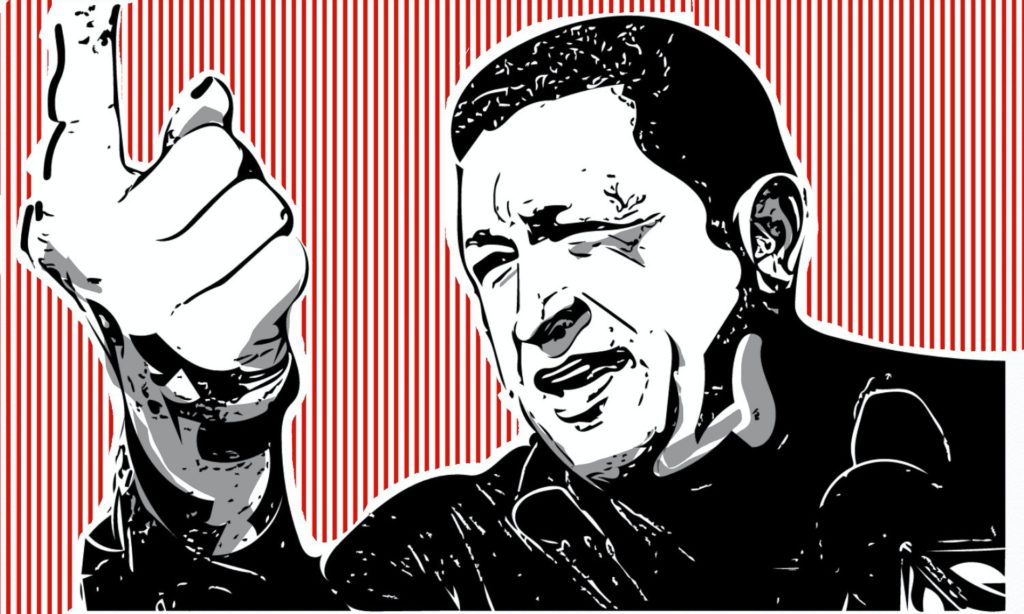
That emphasis on internal capacity invites an uncomfortable but necessary comparison. For much of the second half of the 20th century, before Hugo Chávez rose to power in 1999, Venezuela operated within a democratic framework that —despite recurrent crises and limitations— familiarized society with political alternation, civil liberties, and a basic notion of institutional order.
That experience did not vanish entirely with the country’s subsequent collapse. It persisted, eroded and fragmented, within Venezuela’s political memory, helping to explain why any attempt at institutional reconstruction is unlikely to succeed if imposed solely from the outside.
Even so, Japan remains more the exception than a replicable model. As historian and retired U.S. Army colonel David Hunter-Chester has noted, “while the U.S. occupation of Japan was generous and constructive for the Japanese people, its successes stemmed primarily from Japan’s own formative sociocultural characteristics.”
An exception, not a blueprint
Before the war, Japan was already a developed country undergoing modernization. The occupation did not build a functional society from scratch; it relied on existing capacities, a strong bureaucracy, and human capital capable of absorbing profound transformation. Attempting to export that outcome without reproducing those underlying conditions risks mistaking an exception for a rule.
Reconstruction, moreover, entails costs, institutional design, and political time horizons. The $2.2 billion the United States spent on Japan’s postwar assistance and reconstruction—equivalent to roughly $15.2 billion today, according to the Congressional Research Service—was part of a coherent state policy with defined objectives: economic stabilization, institutional redesign, and strategic integration.
In Venezuela, by contrast, the Trump administration has been ambiguous about what it seeks to build beyond Maduro’s removal. It has floated the prospect of “at least $100 billion” in private investment, particularly in the oil sector, without outlining an institutional framework, governance structure, or clear rules for managing such an effort. The difference from the Japanese precedent is not merely one of scale—it is one of political design.
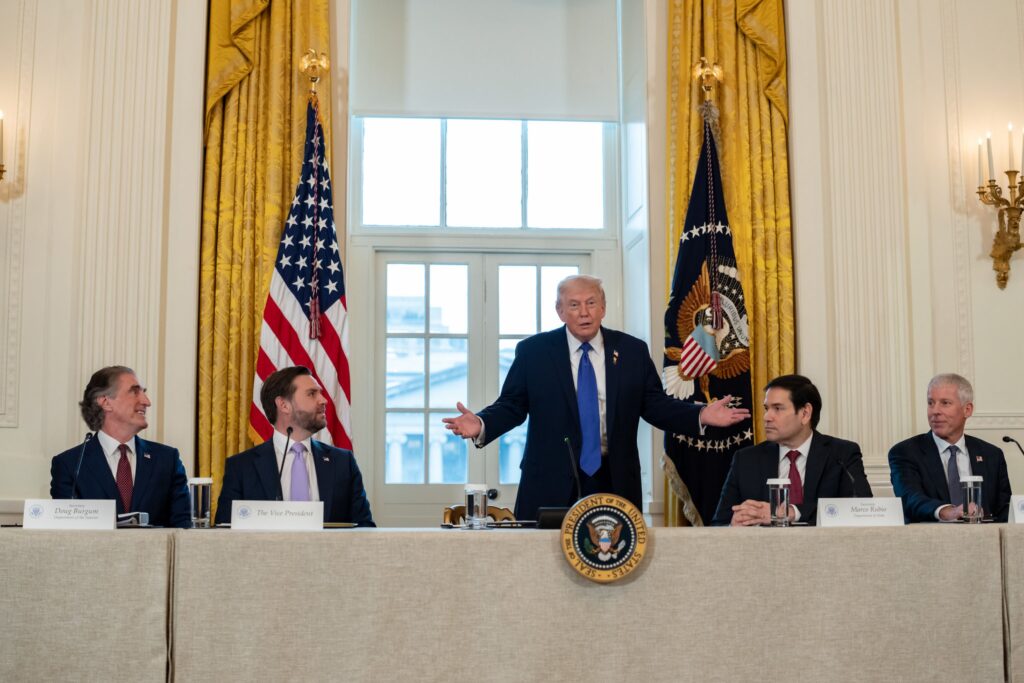
That vacuum is central. Juan S. González, who served as President Joe Biden’s top adviser on Western Hemisphere affairs at the White House, captured the dilemma succinctly in a recent essay: “The immediate challenge for Washington will be to balance control and legitimacy. Force can remove a leader, but it cannot, by itself, build institutions or generate social consensus. If the post-transition process is perceived as imposed from the outside or designed primarily to serve foreign interests, internal resistance will grow, and the legitimacy of the new order will be fragile.”
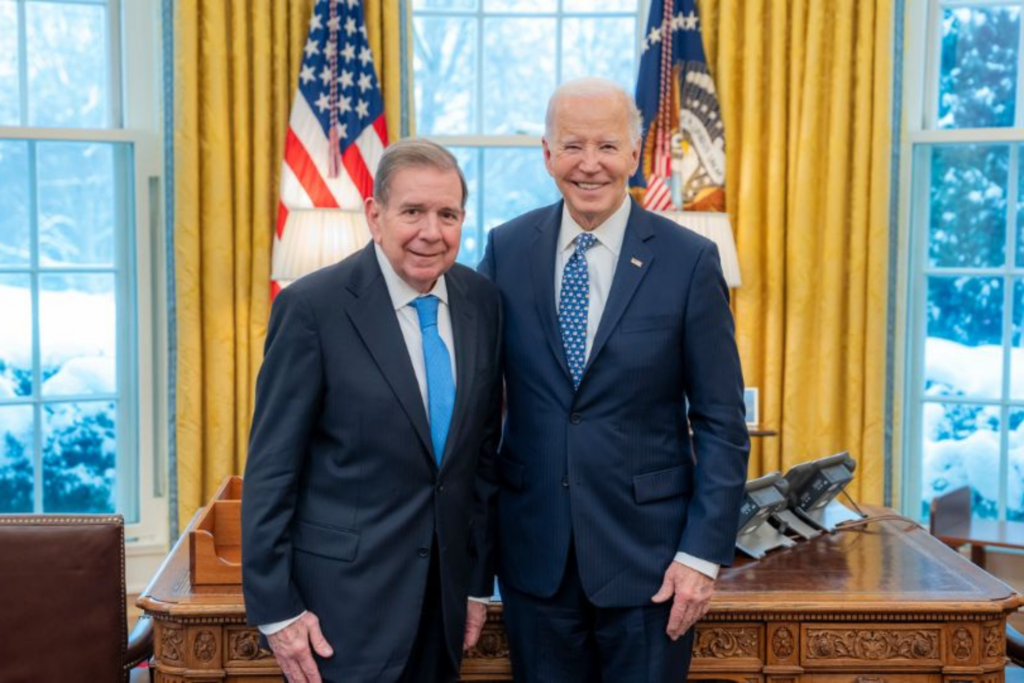
In Venezuela, that tension is compounded by a crisis of political origin. The 2024 presidential election was widely disputed, and sectors of the opposition recognized Edmundo González as the rightful winner. The absence of even a minimal consensus over the electoral outcome left the political system without a clear source of legitimacy from which to organize a transition, well before Maduro’s capture.
Unlike postwar Japan, where a society with preexisting institutional capacity ultimately embraced reforms imposed from above, Venezuela faces a more unstable mix: contested administrative continuity, fragmented electoral legitimacy, and the prospect of external oversight without a defined blueprint. Japan’s history suggests that reconstruction becomes durable only when changes imposed by power are ultimately adopted by society as its own.
The final question, then, is not whether the United States can “run” Venezuela during a transition, but whether such an exercise of power can produce legitimacy—and whether Venezuelan society will have the capacity and political space to turn a forced outcome into a sustainable collective project.
This debate also reflects a broader shift in how Donald Trump conceives international relations. Unlike the Cold War logic that drove Washington to intervene to prevent strategic countries from falling into the Soviet orbit, Trump’s White House views the world through a markedly transactional lens. Had postwar U.S. leaders evaluated a devastated Japan solely in terms of what it could offer materially, rather than its strategic value and long-term potential, the outcome of reconstruction would likely have been radically different.
Under that framework, Latin America is once again treated as a sphere of direct influence, and countries like Venezuela are assessed not only for their political alignment but for what they can offer—resources, geography, strategic value. Some analysts have labeled this approach a “Donroe Doctrine,” a contemporary reinterpretation of the Monroe Doctrine that replaces ideological containment with interest-based calculation. If that logic solidifies, it will not only redefine U.S.–Venezuela relations but could reshape the hemispheric—and perhaps global—order during the coming years of Trump’s presidency.