
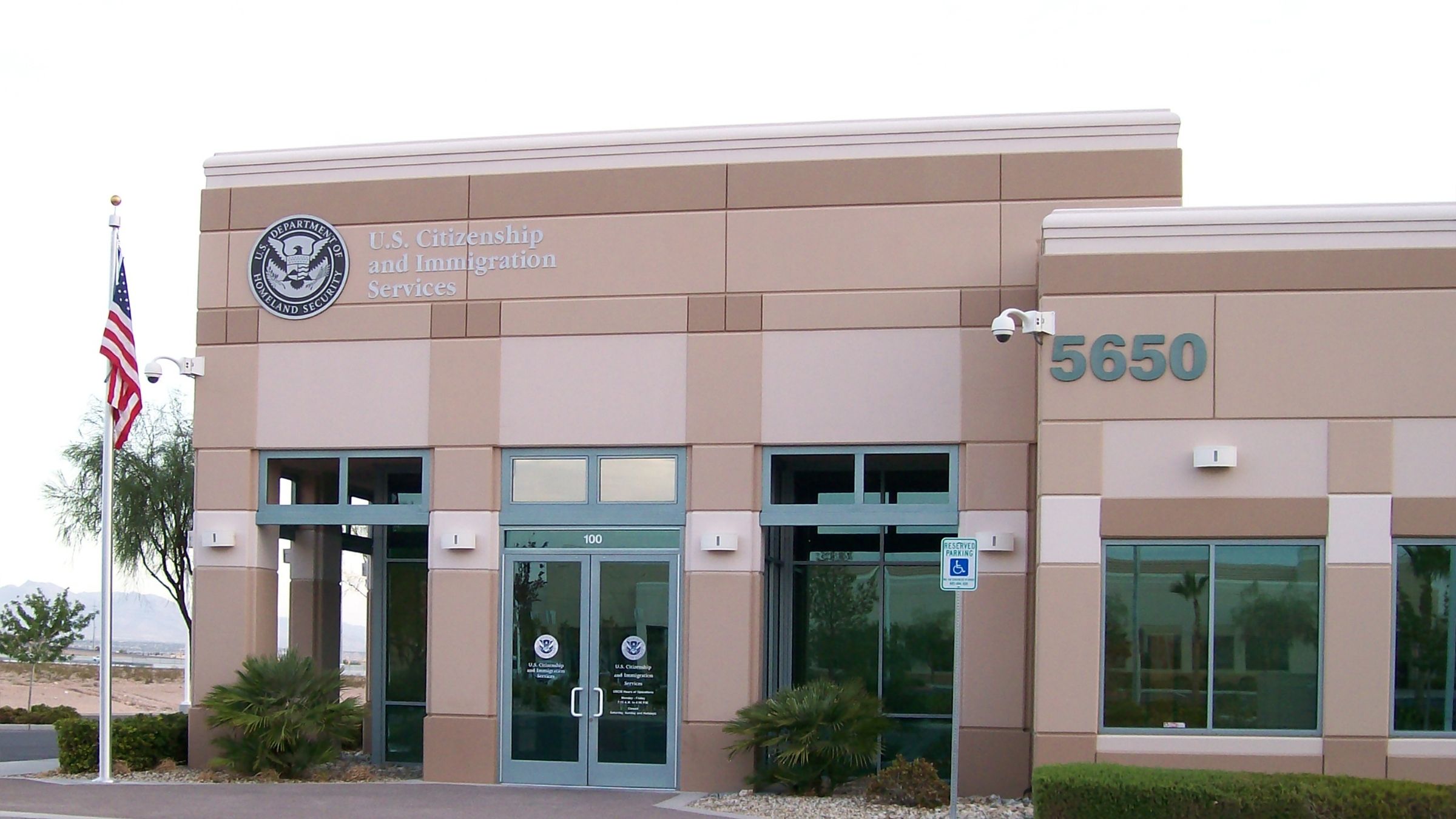
Asylees, refugees and other categories protected by Congress are excluded from this immigration ground, which expands USCIS officers’ discretion to deny permanent residency on economic grounds.
U.S. Citizenship and Immigration Services updated its policy manual to spell out how it will determine, starting Sept. 18, 2026, whether an applicant for permanent residency, known as a green card, is likely to become a “public charge.” The rule will hit hardest those seeking to adjust their status through family or employment, not those arriving under humanitarian protections, such as asylees and refugees.
DHS itself estimates the rule could lead close to 950,000 people to drop out of, or forgo enrolling in, programs like Medicaid, SNAP or housing assistance, even though they are not required to, according to its own regulatory impact analysis.
Independent analysts, however, using data from the Kaiser Family Foundation and George Washington University, argue that figure understates the true scope: they calculate that as many as 3.7 million people could be affected, nearly four times the government’s projection.
The new rule does not apply to all green card applicants. Exempt categories include asylees and refugees, victims of human trafficking or certain crimes, applicants under the Violence Against Women Act, Cubans under the Cuban Adjustment Act, Haitians covered by a special 1998 law, and dozens of other categories granted special protection by Congress. A table with the complete list of covered and exempt categories appears at the end of this story.
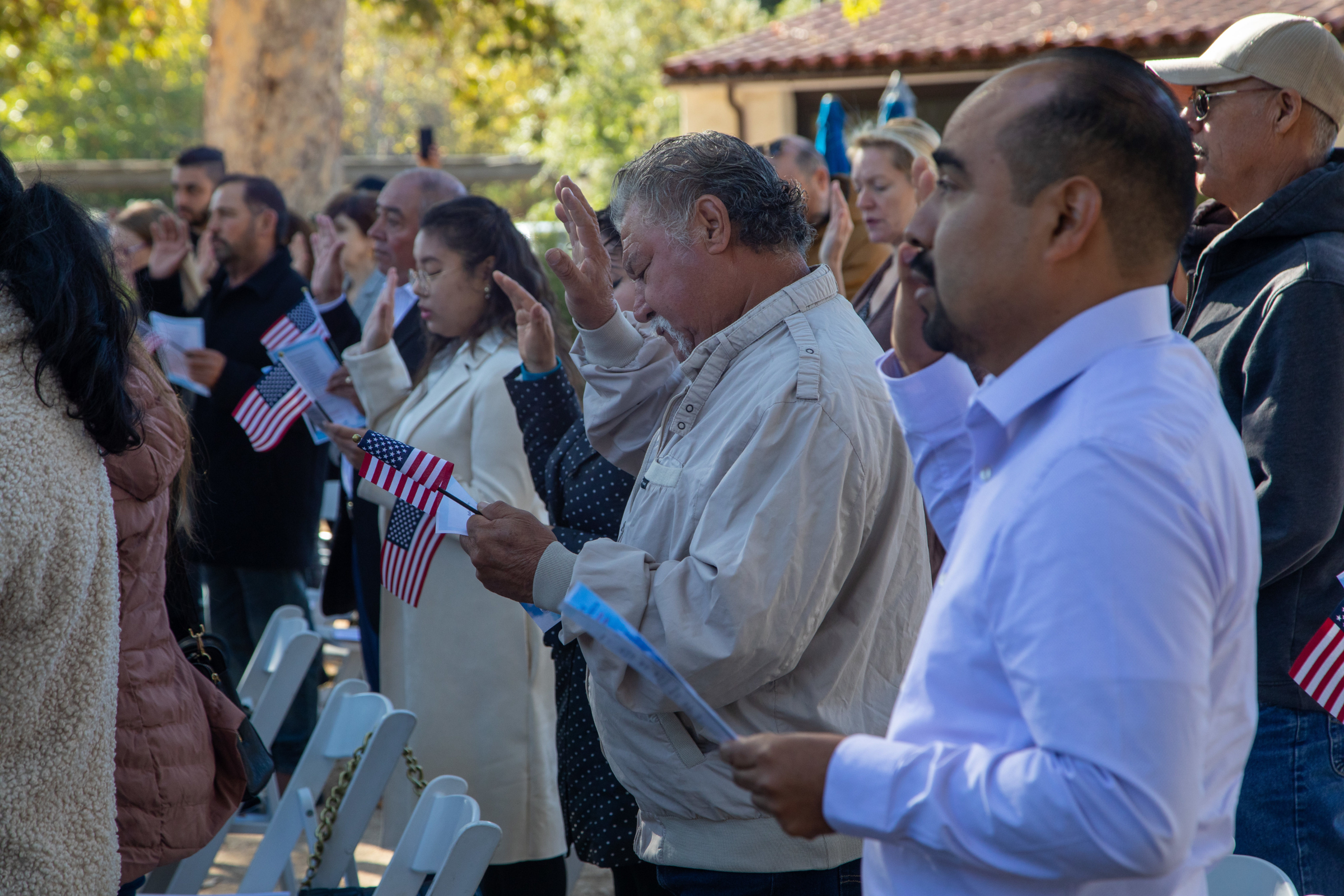
Subject to the rule, by contrast, are most people seeking residency through family ties (spouses, children and parents of citizens or permanent residents), most employment-based categories, investors, religious workers, and siblings or fiancé(e)s of U.S. citizens, among others.
The move follows a final rule DHS published July 20 rescinding regulations the Biden administration put in place in 2022, which had limited which public benefits could count against an applicant. The new guidance, which widens that list again, applies to all Form I-485 applications (the application to adjust status) filed on or after Sept. 18.
What Exactly Changes
USCIS denies roughly 10% of I-485 applications each year, about 61,000 in 2024, almost always over criminal records, fraud or incomplete evidence. The public charge ground accounts for only a sliver of that total.
Nothing in current immigration law spells out precisely what a “public charge” is: it is enough for an officer to judge that a person could become dependent on the government at some point in the future.
Congress did set a floor of five factors: age, health, family status, financial resources, and education or job skills. Also weighed is Form I-864, in which a sponsor, typically a relative, agrees to financially support the applicant if it becomes necessary.
The Trump administration added a sixth factor, the most consequential one: whether an applicant has used income-based public programs, such as cash aid, housing subsidies, SNAP or college financial aid.
The date a benefit was received determines what an officer can weigh, not whether a case is automatically approved or denied. If it was received before Sept. 18, 2026, only cash assistance or government-funded long-term institutional care counts; if received after that date, virtually any similar program can factor into the review.
Not every public benefit counts toward this analysis. Programs such as emergency Medicaid, free or reduced school meals, vaccines, food banks, homeless shelters and disaster relief are not considered.
USCIS weighs all these elements together, and no single factor decides a case on its own: receiving a benefit alone is not enough to deny an application, and having a job does not guarantee approval either. In the official statement accompanying the final rule, USCIS spokesman Zach Kahler defended the move, saying the Trump administration is “protecting American taxpayers from subsidizing aliens who may become dependent on public benefits.”
The Debate
For immigrant rights organizations, the greatest risk is not more residency denials but that families entitled to these benefits will stop applying for them out of fear. Justice in Aging, which advocates for older adults, condemned the rule as part of an anti-immigrant agenda that deepens barriers to health care and other essential benefits, with a particular impact on older immigrants.
Other organizations point instead to the lack of clear guardrails for officers themselves. Jeff Joseph, president of the American Immigration Lawyers Association, told The New York Times that the administration replaced a system of defined criteria with uncertainty and broad discretion that, he warned, risks arbitrary decisions without accountability.
Not every reaction has been one of rejection. The Federation for American Immigration Reform, a group that advocates for reducing immigration to the United States, has long defended the principle behind this policy: that those who come to the country should be self-sufficient and not rely on public coffers. FAIR had openly criticized the 2022 rule now being rescinded, arguing it made it easier for immigrants to access public benefits without risking their immigration case.
Applications Versus Denials, by the Numbers
To gauge the rule’s reach, USCIS and DHS cited their own data on Form I-485, the application used to adjust status to permanent resident, during the rulemaking process. That universe, not the total number of people who already hold green cards, is what matters for this story.
In 2024, the agency received close to 983,000 I-485 applications. That figure, however, does not represent “those affected”: numerous categories are exempt by law, as already noted.
Denials specifically recorded under section 212(a)(4) of immigration law, by contrast, were minimal: just 73 in 2024 and just over 300 over five years, according to DHS itself. The agency also acknowledges that even those figures don’t clearly distinguish between an insufficient Form I-864 and an actual public charge determination, meaning the real number of genuine cases could be smaller still.
In 2019, under the more restrictive version of this policy during the first Trump administration, DHS documented just three denials that resulted from a genuine individualized assessment of the applicant. All three were later reopened, and the applicants ultimately obtained residency.
Those numbers raise the real question behind this new rule: if genuine discretionary public charge denials have historically been extraordinarily rare, what will actually change now that officers have been handed such broad discretion again?
DHS has, in a sense, already answered that question: close to 950,000 people could drop out of programs like Medicaid or SNAP out of fear, even though they are not required to. The rule’s biggest effect, then, may never show up in green card denial statistics, which have stayed minimal for years, but rather in the forms that thousands of families will simply stop filing.
Who is subject to the public charge rule, and who is exempt?
According to official USCIS guidance, effective Sept. 18, 2026.
| Categories that are subject to public charge | Categories that are not subject to public charge |
|---|---|
| Spouses, children, and parents of U.S. citizens | Asylees and refugees |
| Unmarried sons and daughters of U.S. citizens and their children | Amerasian immigrants at admission |
| Spouses, children, and unmarried sons and daughters of LPRs | Afghan and Iraqi interpreters or Afghan and Iraqi nationals employed by or on behalf of the U.S. government |
| Married sons and daughters of U.S. citizens and their spouses and children | Cuban and Haitian entrants at adjustment of status under section 202 of the Immigration Reform and Control Act of 1986 |
| Brothers and sisters of U.S. citizens | Applicants seeking adjustment under the Cuban Adjustment Act |
| Fiancé(e)s of U.S. citizens | Nicaraguans and other Central Americans who are adjusting status to lawful permanent resident |
| Amerasians based on preference category, born on or after Dec. 31, 1950, and before Oct. 22, 1982 | Haitians who are adjusting status to lawful permanent resident under the Haitian Refugee Immigration Fairness Act of 1998 |
| Widows or widowers of U.S. citizens | Lautenberg parolees |
| Priority workers | Special immigrant juveniles |
| Professionals with advanced degrees or aliens of exceptional ability | Applicants for registry |
| Skilled workers, professionals, and other workers | Applicants seeking Temporary Protected Status |
| Investors | Certain nonimmigrant ambassadors, ministers, diplomats, and other foreign government officials, and their families |
| Religious workers | Victims of human trafficking (T nonimmigrants) |
| Certain employees or former employees of the U.S. government abroad | Victims of qualifying criminal activity (U nonimmigrants) |
| Panama Canal Zone employees | Self-petitioners under the Violence Against Women Act |
| Foreign medical school graduates | Certain battered aliens who are “qualified aliens” under the Personal Responsibility and Work Opportunity Reconciliation Act of 1996 |
| Retired employees of international organizations | Applicants adjusting status who qualify for a benefit as surviving spouses, children, or parents of military members |
| U.S. armed forces personnel | American Indians born in Canada who are not U.S. citizens |
| International broadcasters | Certain members of the Texas Band of Kickapoo Indians of the Kickapoo Tribe of Oklahoma |
| Diplomats or high-ranking officials unable to return home (Section 13 of the Act of September 11, 1957) | Nationals of Vietnam, Cambodia, and Laos applying under the Foreign Operations, Export Financing, and Related Programs Appropriations Act of 2001 |
| Diversity visa immigrants | Polish and Hungarian parolees |
| Certain entrants before Jan. 1, 1982 | Certain Syrian nationals |
| Alien witnesses or informants | Applicants adjusting under the Liberian Refugee Immigration Fairness law |
Source: USCIS Policy Manual, public charge guidance effective Sept. 18, 2026.